
COP30: Key outcomes for Australian Businesses
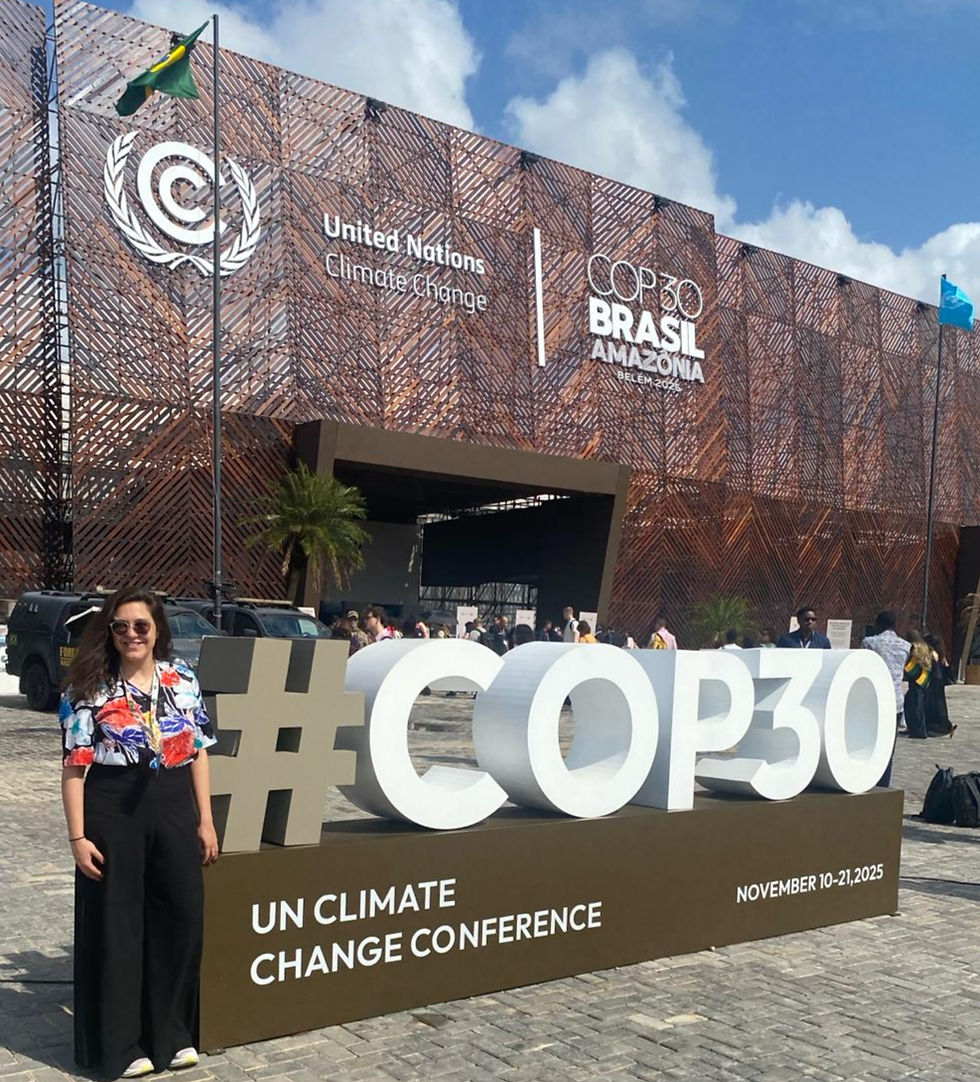
This year marked ten years since the Paris Agreement was signed, and COP30 in Belém felt like a chance to pause and ask where we actually stand. The science now shows that the world is likely to temporarily go above 1.5 degrees, which is not what any of us hoped for. But the bigger picture is more nuanced. Countries are still moving, emissions are slowly bending downward, and cooperation is proving more resilient than many expected in such a complex geopolitical moment.
Belém brought a different tone to the conversation. Instead of the usual focus on high-level declarations, discussions centred on practical solutions and on how countries, businesses and communities can turn plans into real results. That shift matters for Australia, especially as climate reporting, energy transition and circularity become part of everyday business decisions and as the country prepares to preside over COP31 negotiations next year.
Below are the key outcomes from COP30 that are most relevant for Australian organisations, explained in simple and accurate language!
1. The Global Mutirão: a collective effort to accelerate climate action
Brazil introduced the idea of a mutirão, the Portuguese word for a coordinated community effort, to shape the overall outcome of COP30. This concept guided the main political decision of the summit, known as the Global Mutirão. It reaffirms the Paris Agreement goals, recognises that current global trajectories are not yet sufficient, and calls for stronger cooperation to accelerate implementation.
Two new cooperation processes form the backbone of this decision:
The Global Implementation Accelerator is a voluntary initiative, guided by the COP30 and COP31 Presidencies, designed to support countries as they implement their national climate and adaptation plans. It aims to identify barriers, share good practice and mobilise cooperation to improve delivery.
The Belém Mission to 1.5 will focus on both mitigation and adaptation, helping countries raise ambition and strengthen their next round of climate plans. Both initiatives will report back at COP31 and are intended to drive practical progress, not add new commitments without action.
The Mutirão also strengthens references to Indigenous Peoples, women, workers, young people and local governments. This reflects a broader global understanding that climate action is more effective when communities shape the solutions that affect them.
2. Energy transition momentum continues
Although countries did not reach consensus on formal language to phase out fossil fuels, COP30 still delivered meaningful progress on energy.
Countries reaffirmed the global goals to triple renewable energy and double energy efficiency by 2030. These remain central pillars of the global mitigation effort.
COP30 also launched the Sustainable Fuels 4X Pledge, which aims to quadruple the production and use of sustainable fuels by 2035. This includes hydrogen, biomethane, advanced biofuels and synthetic fuels. This is directly relevant for Australia’s emerging clean fuels sector and for hard-to-abate industries seeking low-carbon fuel alternatives.
There was also a strong emphasis on the need for modern grids, energy storage and system reliability. As electrification accelerates, energy systems must be able to handle rising demand from industry, transport and digital infrastructure. EC Focus supports clients in these areas by integrating renewable energy and electrification strategies into decarbonisation plans that are both technically sound and finance ready! Check out a few examples here.
3. Circularity gains structure through the Global Circularity Protocol
COP30 saw the launch of the Global Circularity Protocol for Business, a unified approach to measure and report circular economy performance. It aligns with emerging international sustainability standards and gives companies a consistent way to quantify material use, resource efficiency and circularity across value chains.
For EC Focus clients, this means circularity can be integrated more systematically into transition planning. Reducing waste, improving material flows and designing products and buildings for reuse are increasingly recognised as climate actions. The protocol helps organisations quantify these contributions in a credible way. For more information on our circular economy services, visit this page.
Climate finance gains direction through the Baku to Belém Roadmap
Climate finance was one of the more challenging negotiation areas, but countries agreed on the Baku to Belém Climate Finance Roadmap. The roadmap sets a collective ambition to mobilise at least 1.3 trillion US dollars per year for developing countries by 2035 and strengthens expectations for predictability, transparency and alignment between public and private finance.
5. Adaptation becomes more structured with new global indicators
Adaptation refers to how countries and communities prepare for and respond to climate impacts such as heat, floods, storms, bushfires and pressures on water, food, health and infrastructure. Unlike emissions reduction, which has established metrics, adaptation has historically been harder to define and measure.
COP30 made important progress by agreeing on 59 voluntary indicators for the Global Goal on Adaptation. These indicators give countries and organisations a shared framework for understanding what resilience looks like across key systems. They cover areas such as access to clean water, food security, early warning systems, ecosystem health and infrastructure readiness.
Countries also signalled support to significantly scale up adaptation finance, with a political goal to triple adaptation finance by 2035. While operational details will evolve, this shift signals that resilience is no longer treated as secondary to mitigation. For Australia, these indicators can be used to guide risk assessments and reporting expectations as mandatory climate disclosures begin.
6. A new mechanism to support a just and inclusive transition
Countries agreed to establish the Belém Action Mechanism for a Global Just Transition. This mechanism will help countries design policies that consider workers, skills, economic diversification and the impacts of industrial change.
For Australian organisations, particularly those in energy, manufacturing, industrial processes and regional sectors, this is relevant in two ways.First, investors and regulators increasingly expect companies to show how workforce and community impacts are being managed. Second, as Australia accelerates its transition, especially in resource-dependent regions, this mechanism provides international guidance on what well-managed and inclusive transition planning looks like.
Embedding social considerations into decarbonisation projects will strengthen both compliance and social licence.
7. Forests, nature and long-term conservation finance
With COP30 hosted in the Amazon, forests and nature were central to the agenda. Brazil launched the Tropical Forests Forever Facility (TFFF), designed to provide long-term, predictable funding for countries that protect tropical forests. A dedicated portion supports Indigenous and local communities that have long been central to conservation.
This reflects a wider global trend to integrate nature into climate strategies. For businesses, especially those with supply chain exposure to land use, agriculture or imported materials, it reinforces the need for stronger nature-positive commitments and clearer policies on deforestation.
8. Australia takes on a key leadership role heading into COP31
A notable political outcome for our region is the final arrangement for COP31. Türkiye will host the conference, while Australia will preside over the negotiations and convene a Pre-COP meeting in the Pacific.
This was not Australia’s preferred scenario, but it is still an important and influential role. Presiding over negotiations places Australia in a position to guide the global climate agenda in 2026 and increases expectations for domestic credibility. Companies with well-developed transition plans, strong data and transparent reporting will be better positioned as Australia steps into this leadership role.
Next steps
COP30 did not resolve every challenge, but it delivered new tools, clearer direction and a renewed sense of collective effort. The tone was pragmatic but constructive, acknowledging the difficulties and choosing to accelerate cooperation rather than retreat.
For Australian organisations, the message is clear. Expectations for emissions reduction, resilience, transparent reporting, just transition and circularity will continue to grow. Businesses that invest early in strong data, credible pathways and practical solutions will be better prepared for the next phase of global climate action.
EC Focus will continue supporting clients across Australia to turn climate commitments into measurable, finance-ready and impactful outcomes. EC Focus, turning decarbonisation into a funded strategy!


Comments